Darbar
In the nineteenth century the courts of Rajputana began to dress their palaces in the classical ornament of Europe.
In Jaipur, the Albert Hall, designed by Samuel Swinton Jacob, opened in 1887. In Gwalior, Jai Vilas rose in Tuscan, Doric and Corinthian storeys, with two chandeliers of three and a half tonnes each in its durbar hall. In Hyderabad, Falaknuma was finished in Italian marble.
Jaipur already knew how to weave from a pattern. In the 1850s Sawai Ram Singh II set up carpet looms in the city's jail, and they wove after classical carpets.
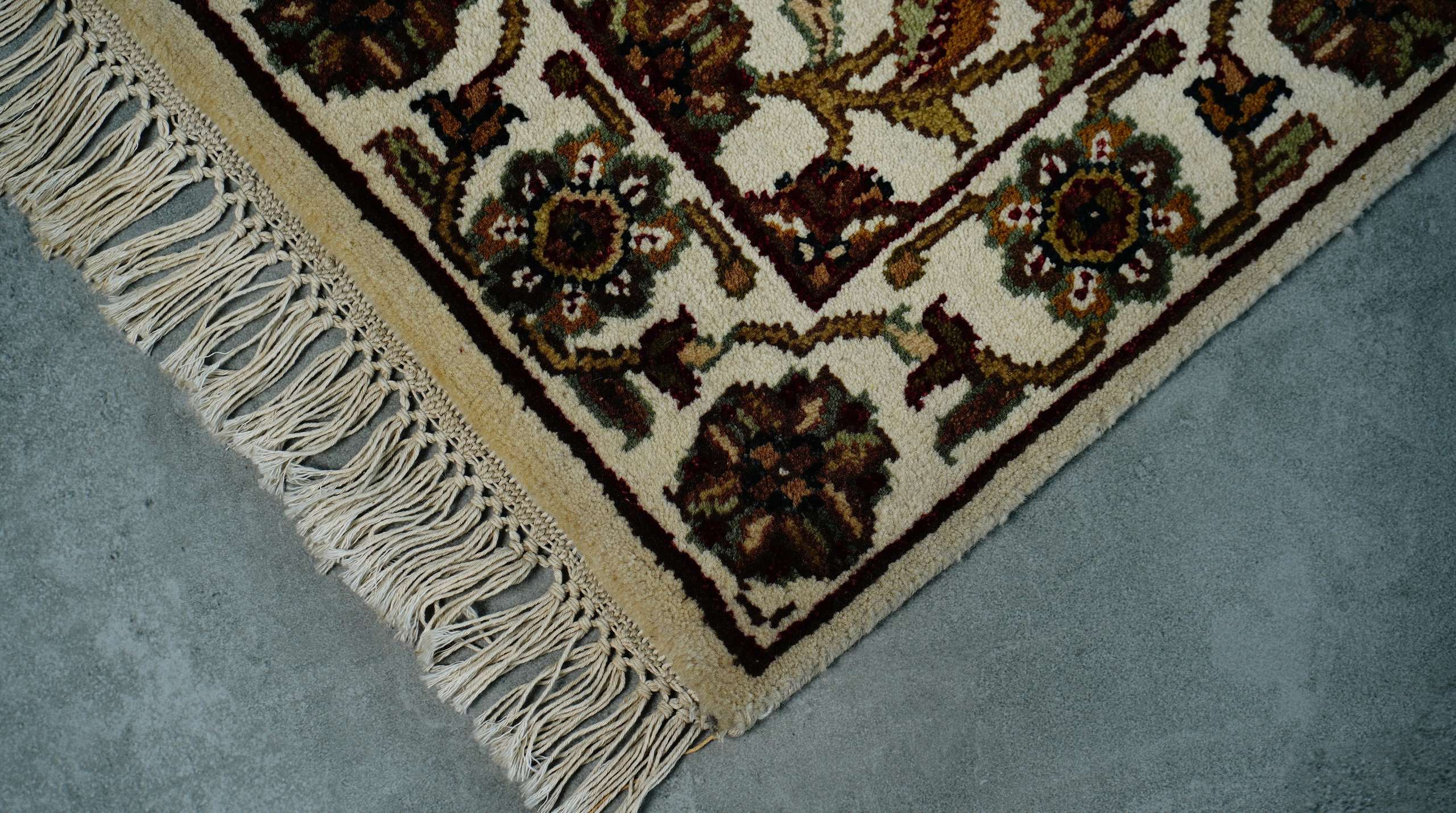
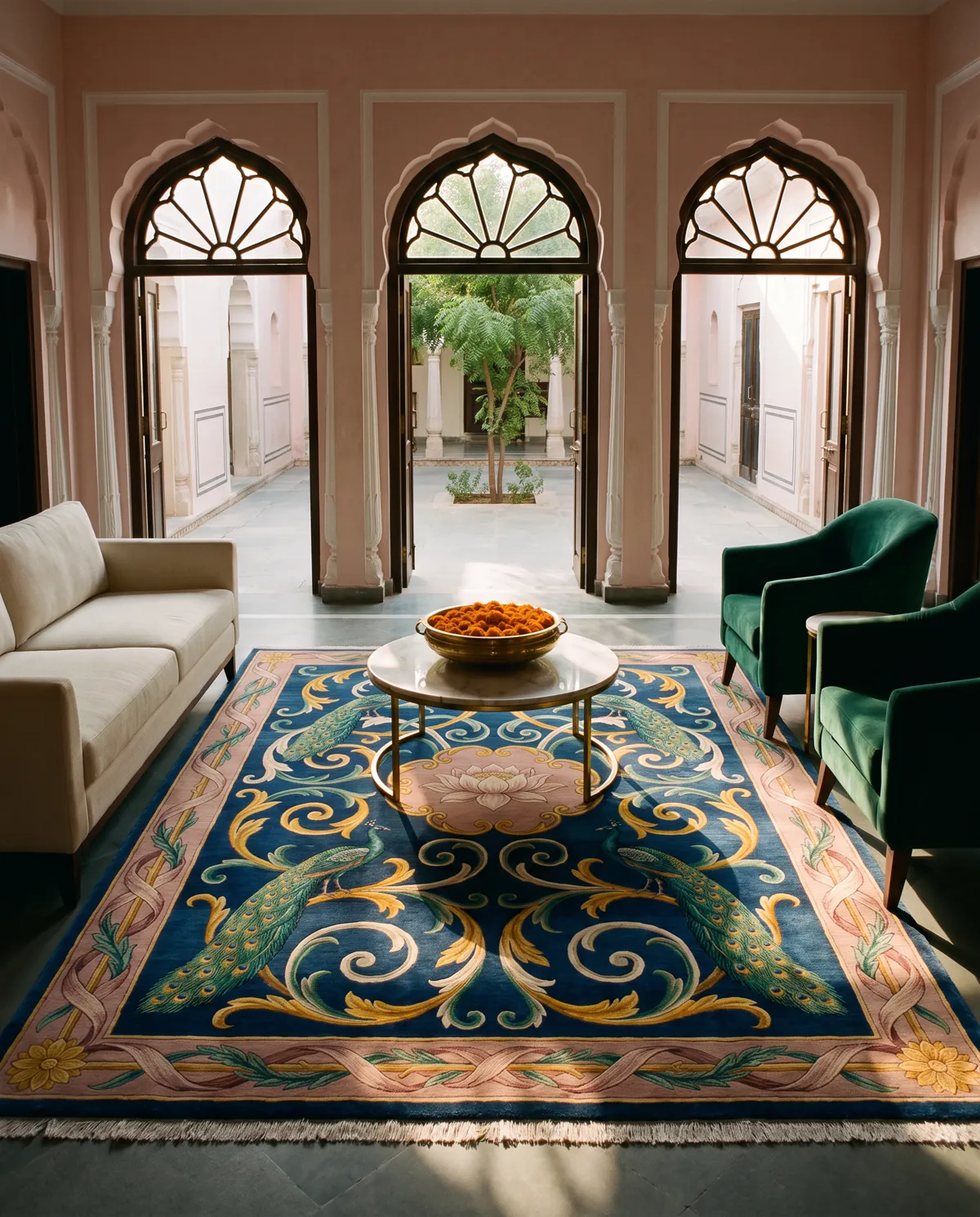
Darbar takes the ornament of those rooms and draws it again the way Jaipur might: a lotus where a rose would be, a toran where a swag would hang, and the colours of its own walls, pink sandstone, lime plaster and indigo. Fifteen pieces in three chapters: stucco, marble and mirror, velvet and gilt.
- Origin
- Jaipur, Rajasthan
- Materials
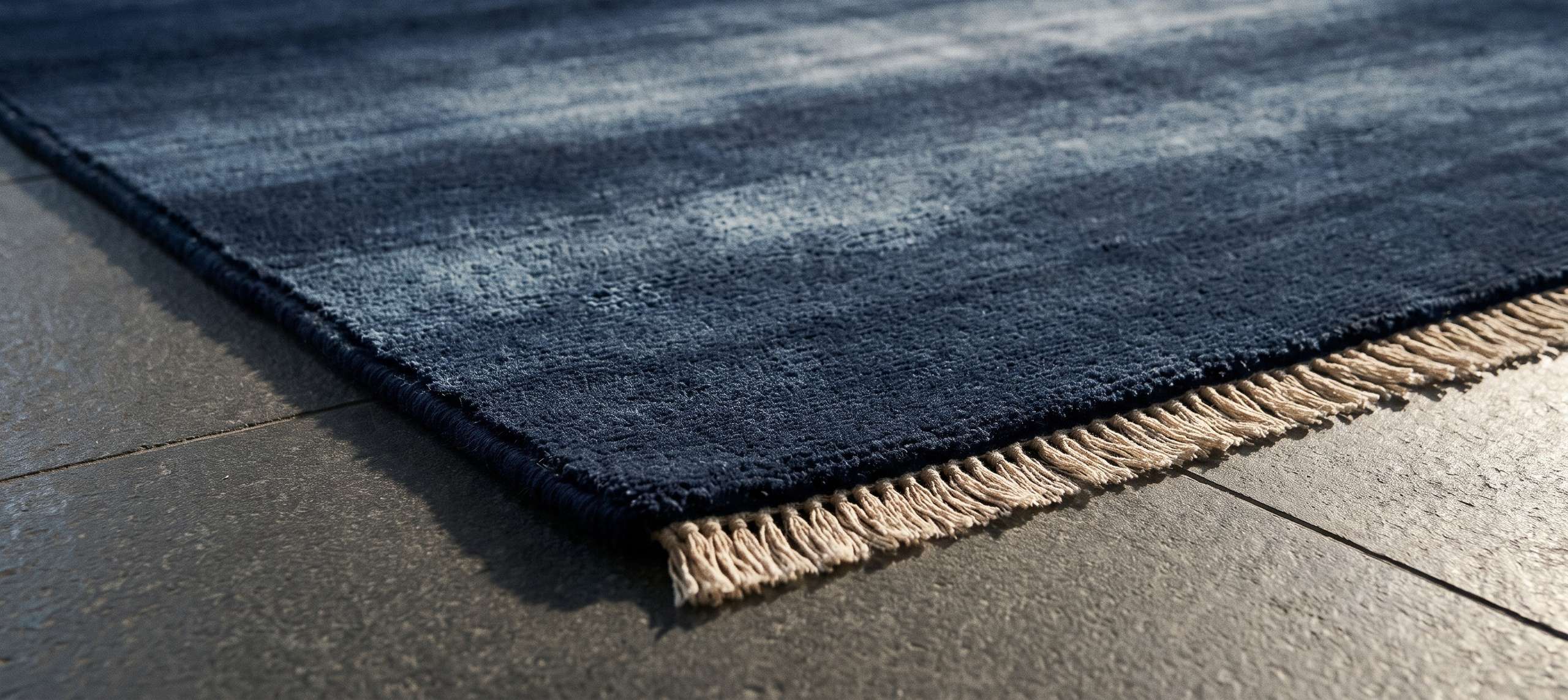
- Hand-spun New Zealand wool with mulberry silk accents, cotton warp
- Density
- 6 to 14 knots per inch
- Lead Time
- 6 to 10 months on the loom
Stucco
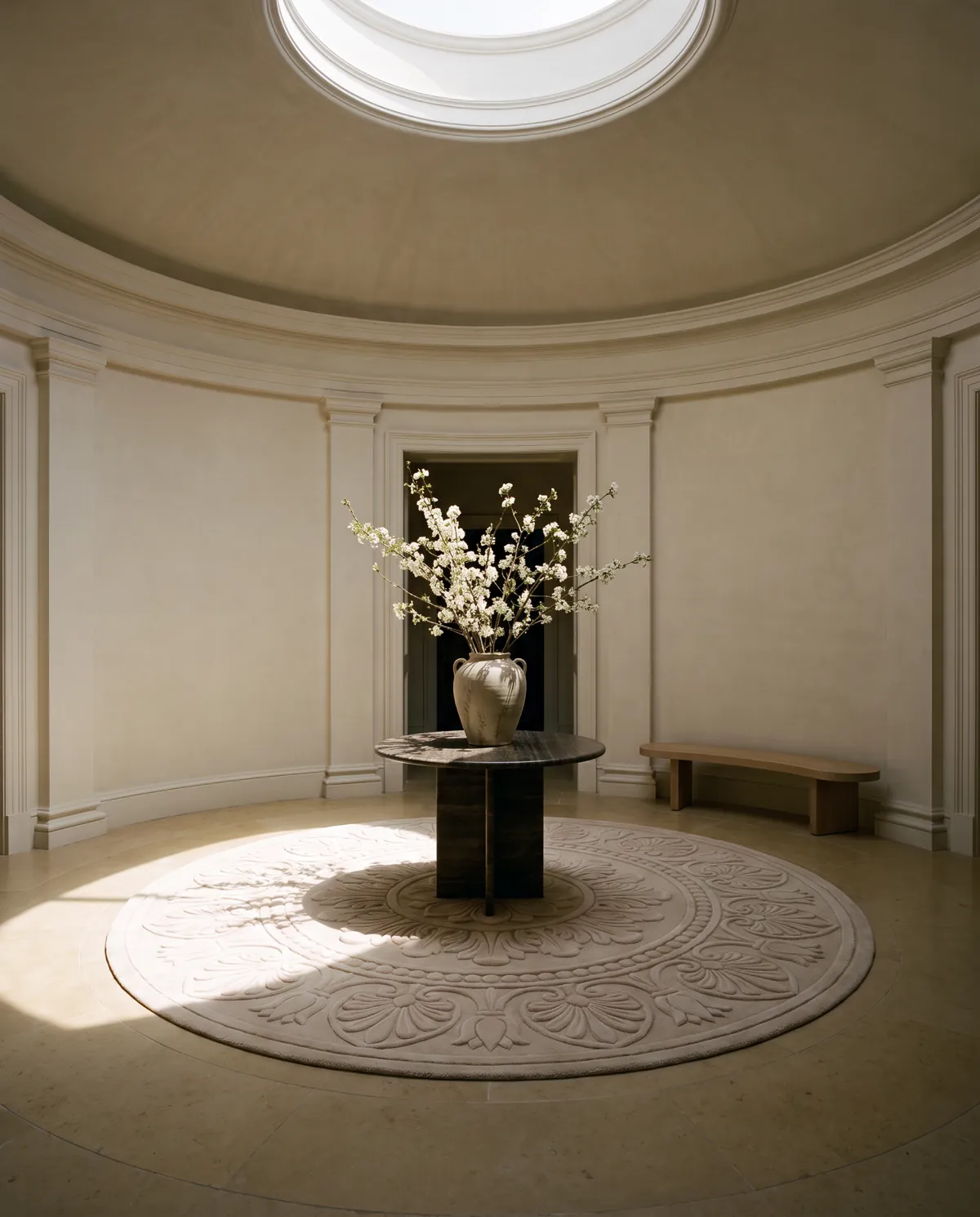
Plaster, carved and left white. Ornament that shows itself only when the light moves.
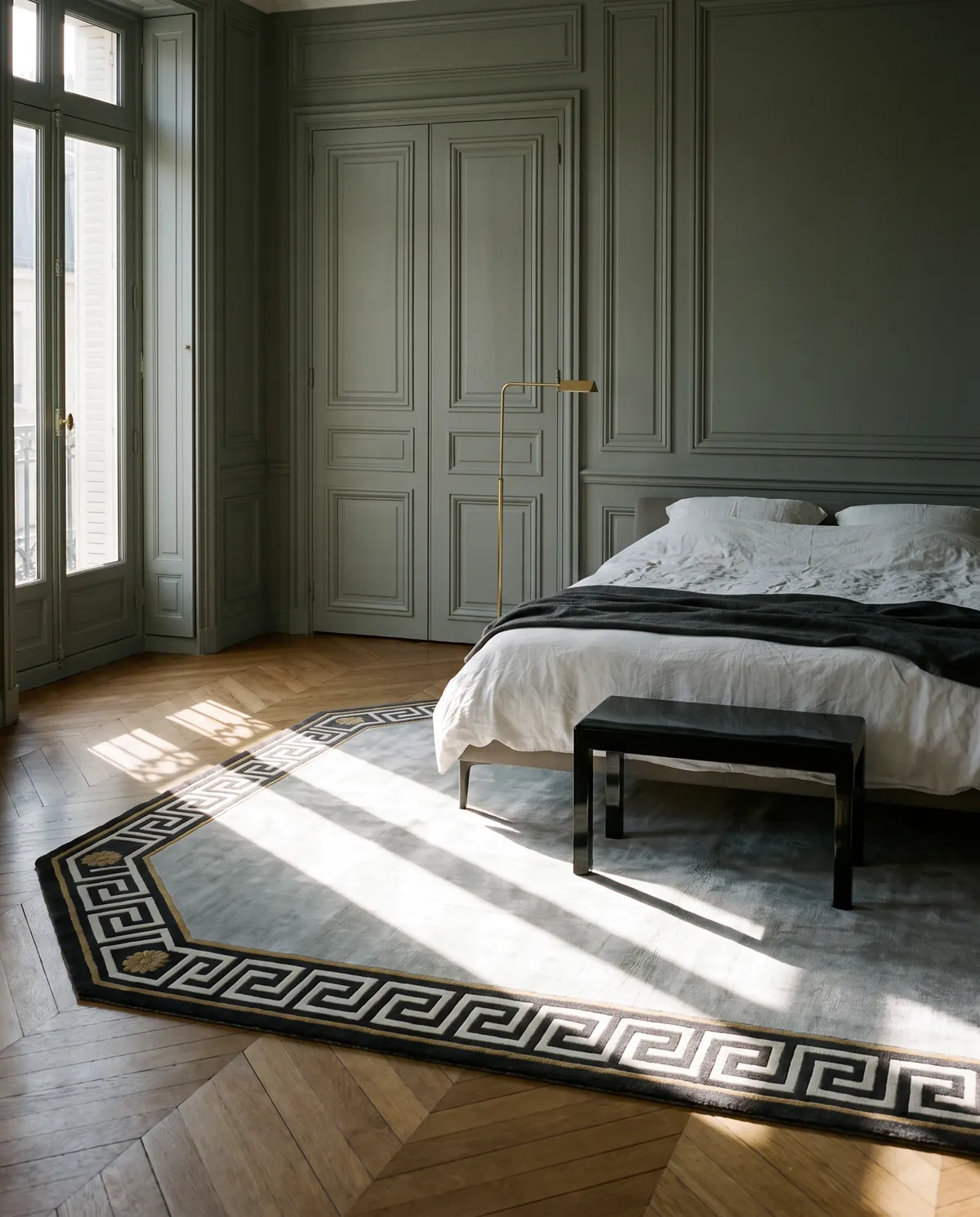
Marble and Mirror
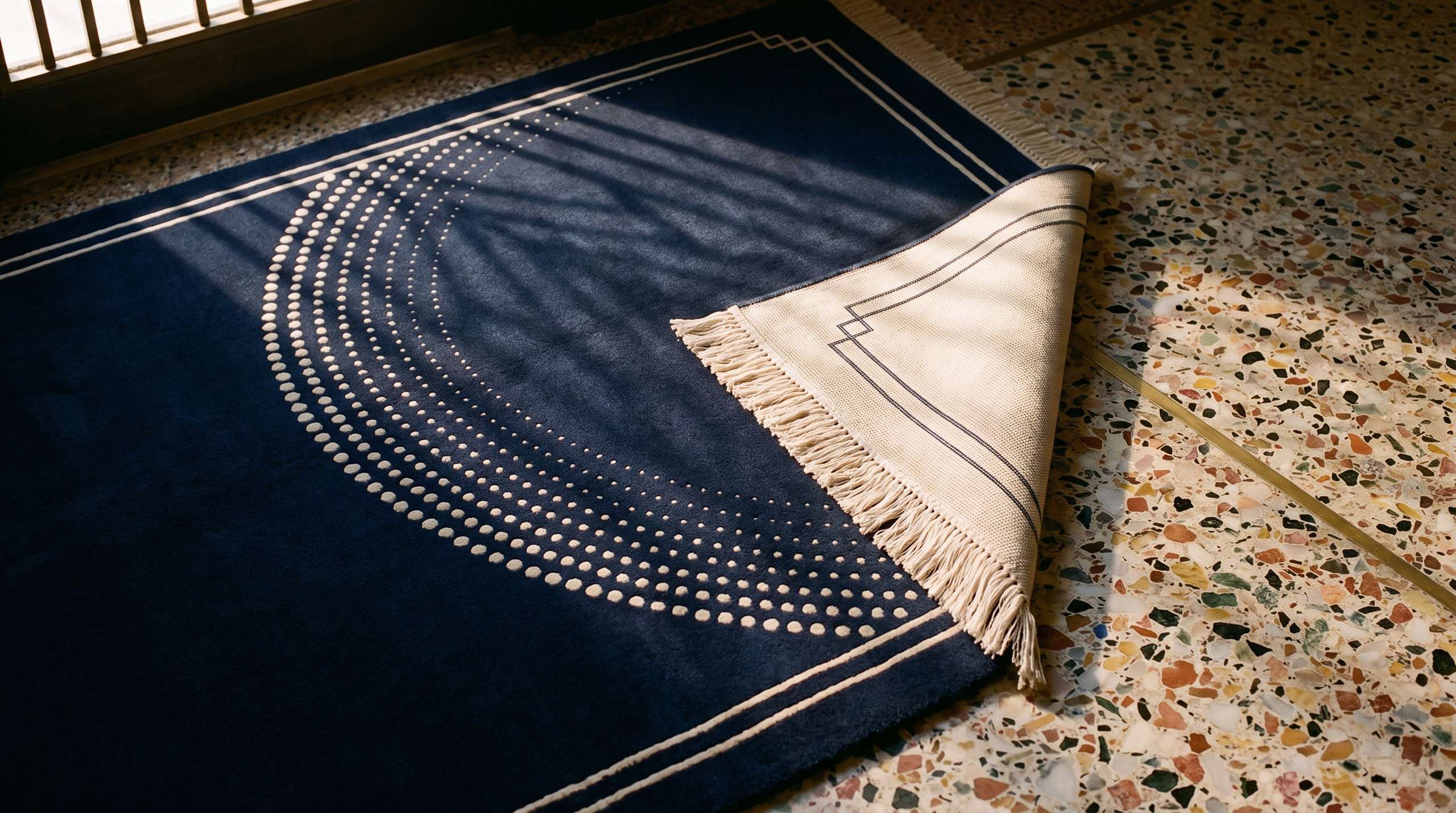
Black, white, silver and grey. Ornament cut sharp, cropped and framed.
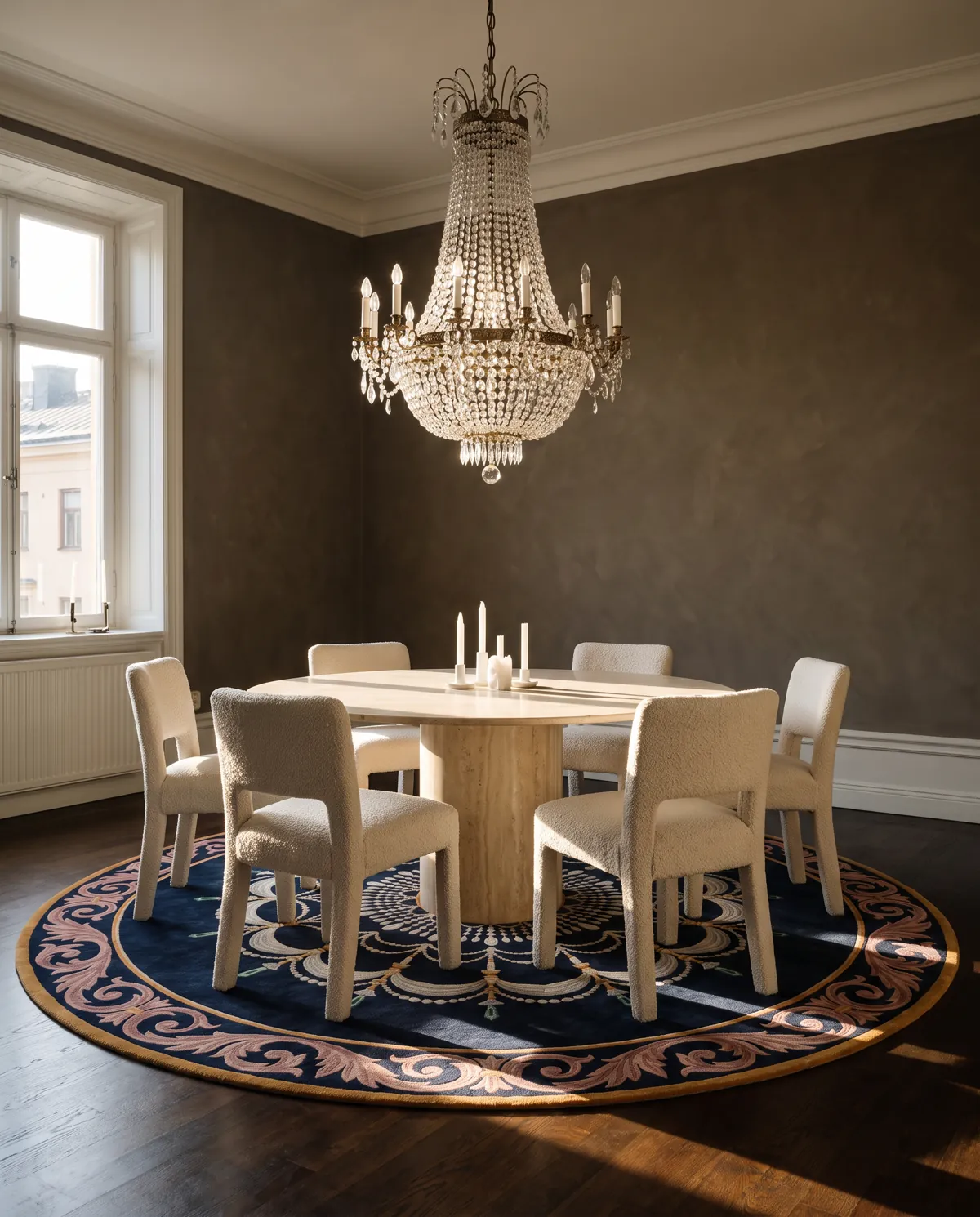
Velvet and Gilt
The durbar in full colour: the pink, indigo and saffron of Jaipur.
Knotted for your room
Every piece is knotted by hand in Jaipur, in the size and colours your room needs. Tell us about the space and we will help you choose.
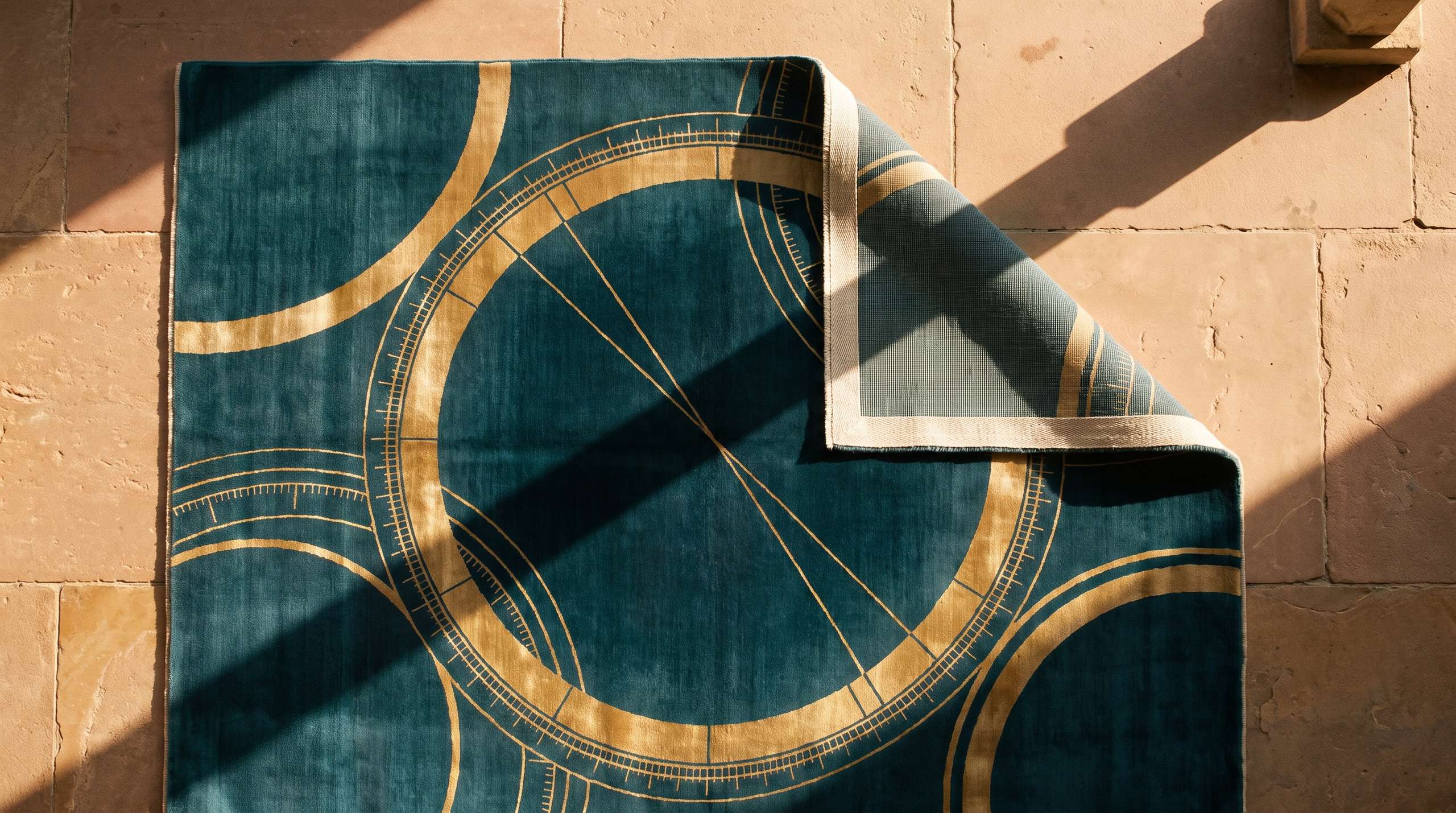
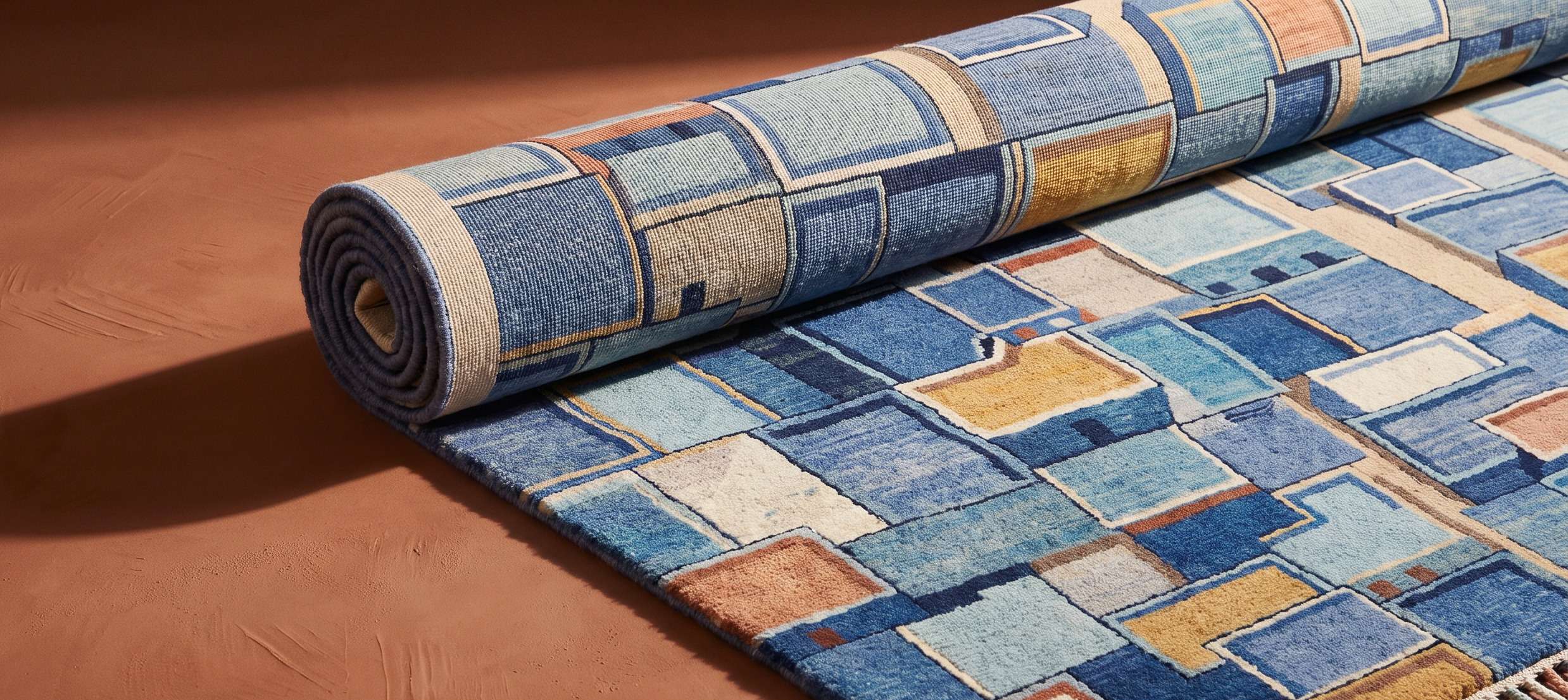
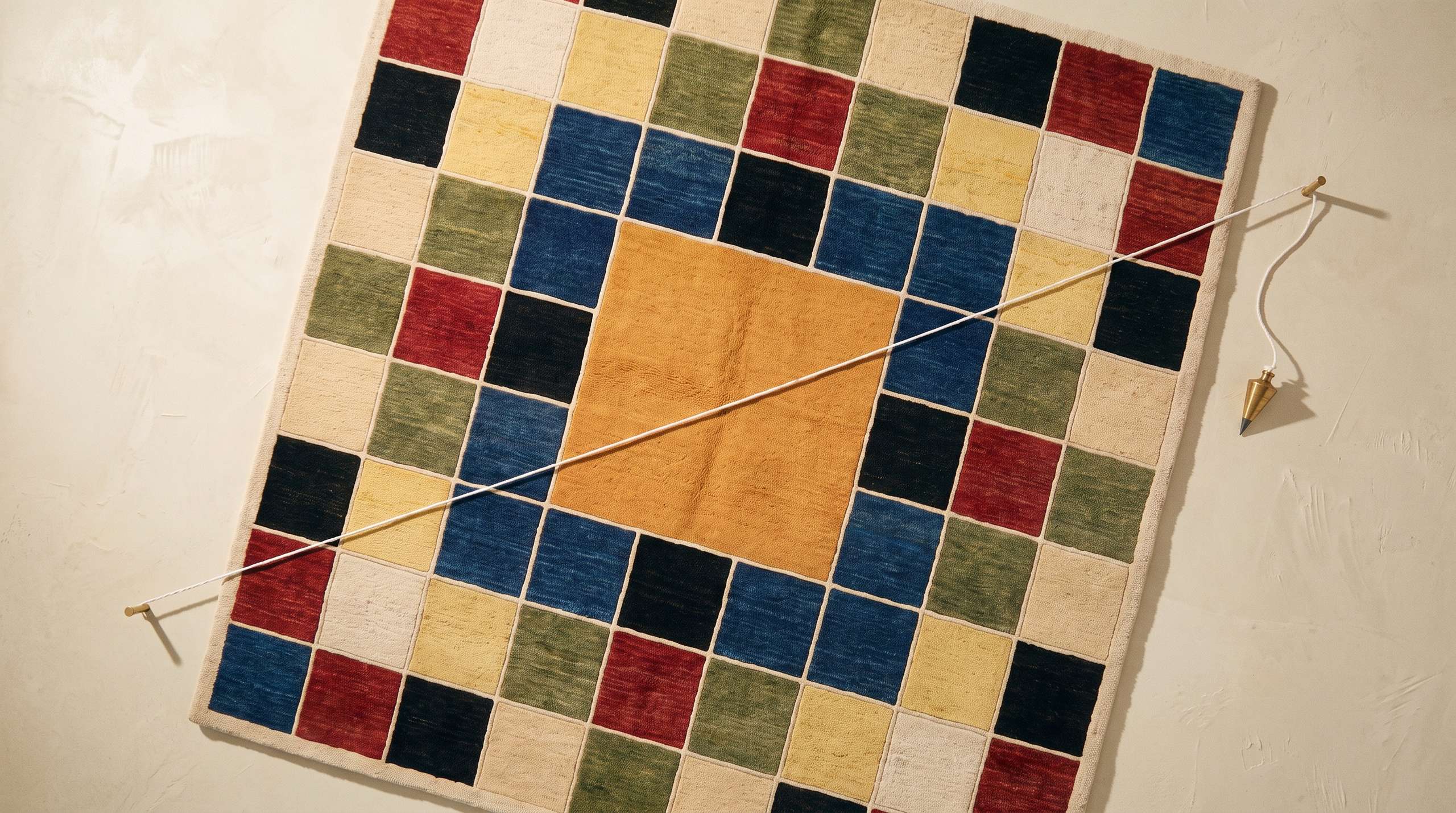
Most pieces are shown as renderings; three are photographs of finished rugs. Every piece is woven to order in Jaipur.
Darbar
In the nineteenth century the courts of Rajputana began to dress their palaces in the classical ornament of Europe.
ScrollIn Jaipur, the Albert Hall, designed by Samuel Swinton Jacob, opened in 1887. In Gwalior, Jai Vilas rose in Tuscan, Doric and Corinthian storeys, with two chandeliers of three and a half tonnes each in its durbar hall. In Hyderabad, Falaknuma was finished in Italian marble.
Jaipur already knew how to weave from a pattern. In the 1850s Sawai Ram Singh II set up carpet looms in the city's jail, and they wove after classical carpets.
Darbar takes the ornament of those rooms and draws it again the way Jaipur might: a lotus where a rose would be, a toran where a swag would hang, and the colours of its own walls, pink sandstone, lime plaster and indigo. Fifteen pieces in three chapters: stucco, marble and mirror, velvet and gilt.
- Origin
- Jaipur, Rajasthan
- Materials
- Hand-spun New Zealand wool with mulberry silk accents, cotton warp
- Density
- 6 to 14 knots per inch
- Lead Time
- 6 to 10 months on the loom
Stucco
Plaster, carved and left white. Ornament that shows itself only when the light moves.
Marble and Mirror
Black, white, silver and grey. Ornament cut sharp, cropped and framed.
Velvet and Gilt
The durbar in full colour: the pink, indigo and saffron of Jaipur.
Knotted for your room
Every piece is knotted by hand in Jaipur, in the size and colours your room needs. Tell us about the space and we will help you choose.
Most pieces are shown as renderings; three are photographs of finished rugs. Every piece is woven to order in Jaipur.